: Could not find asset snippets/file_domain.liquid/assets/img/top/loading.png)
灰色の空に朝日がやってくると、軒先の氷柱がきらきらと光を反射しだす。夜のうちに育ったそれらは、太陽が上がり気温が上がると、ばたばたっと音を立てて落ちていく。
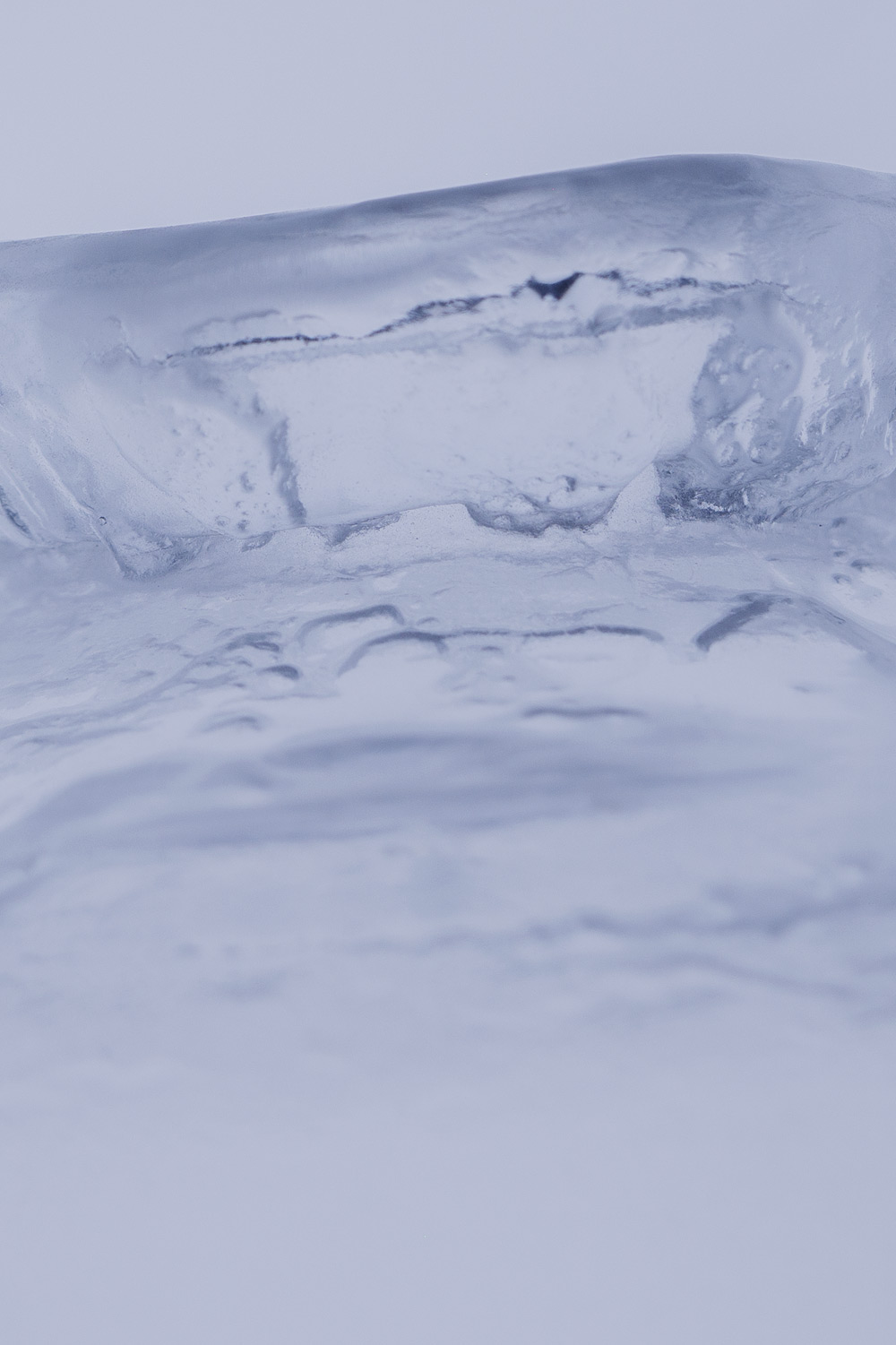
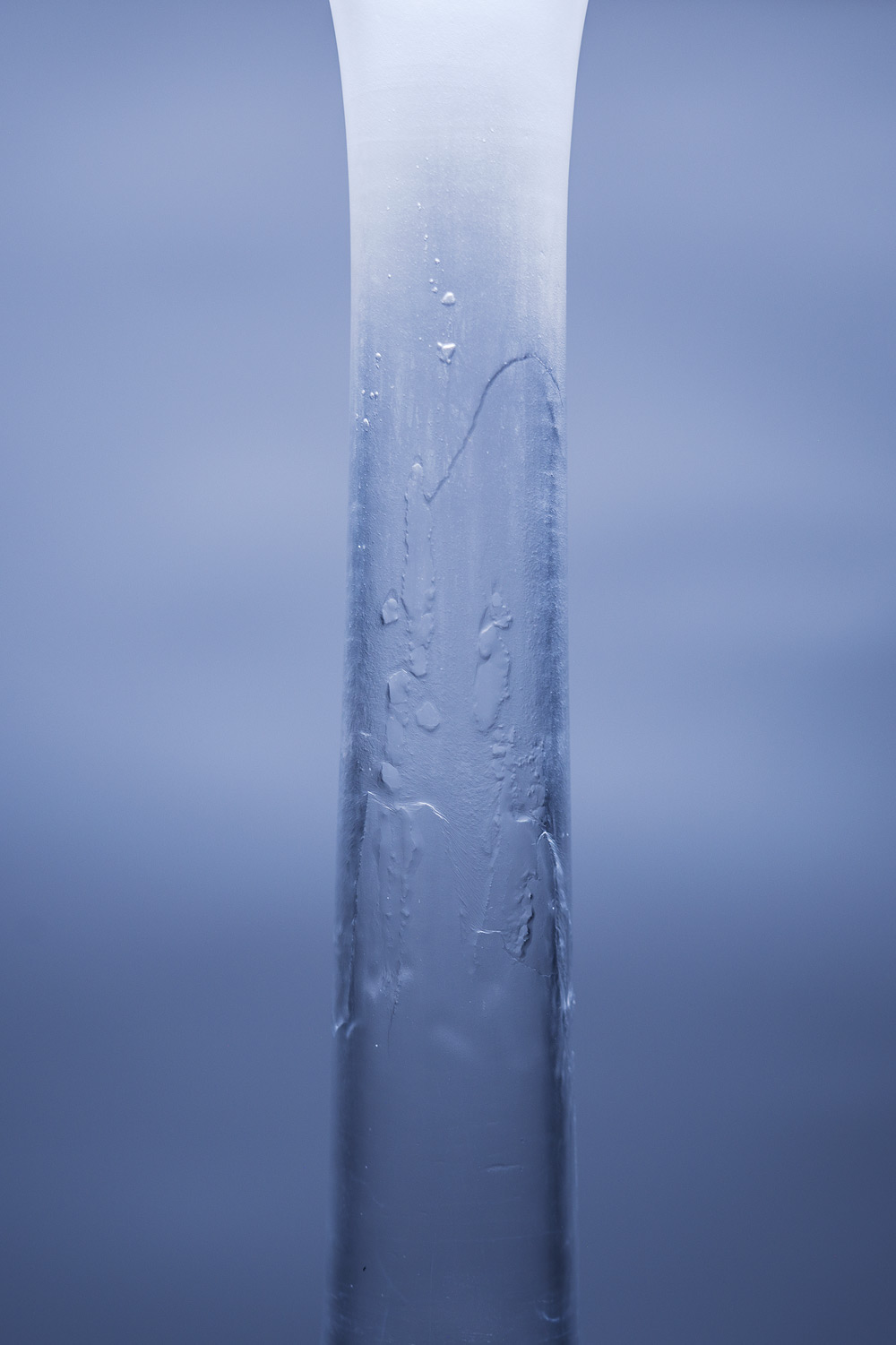
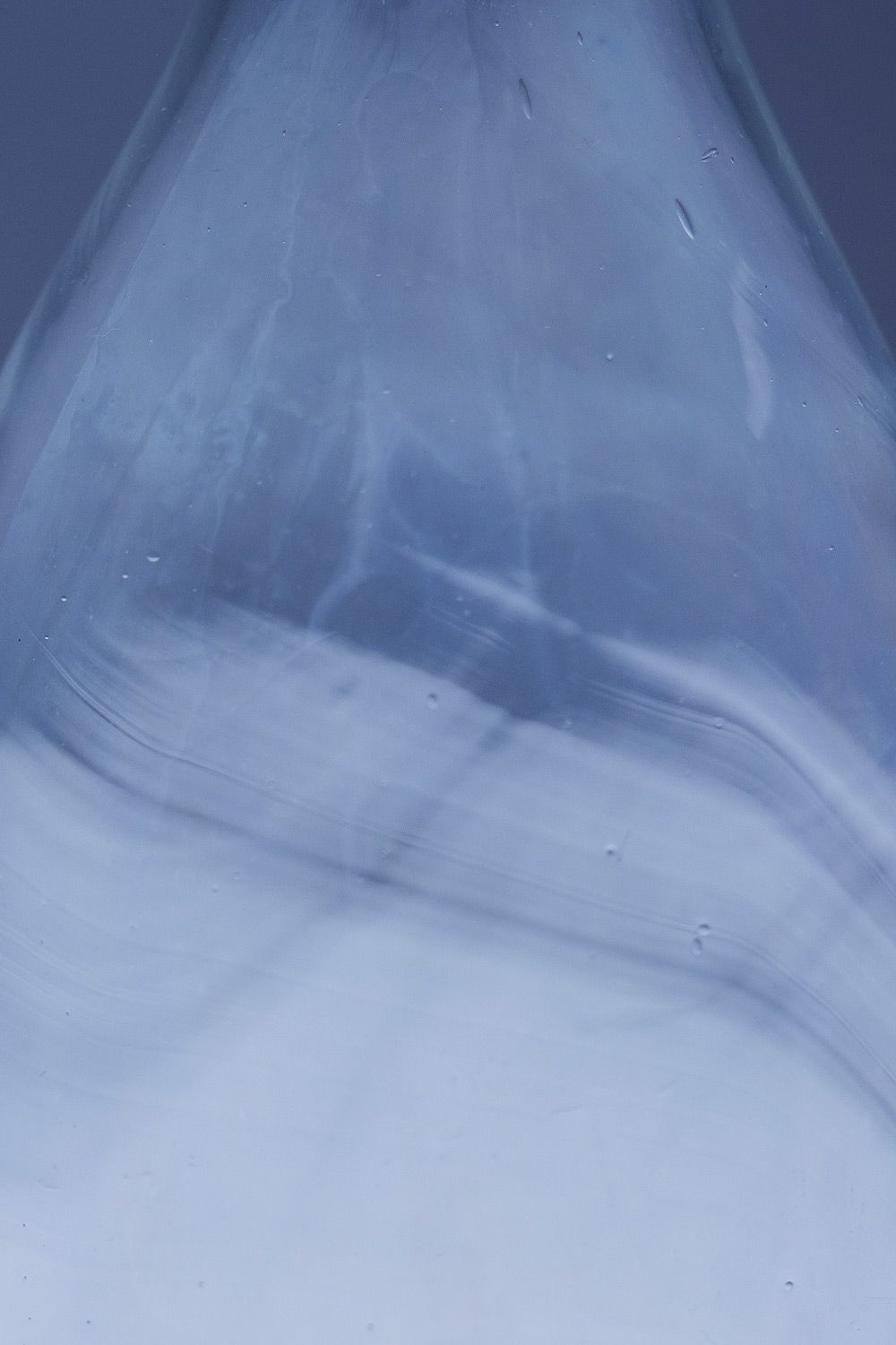
瀬沼健太郎さんの硝子の花器は大地から水が立ち上がったような質感をしていて、水を注ぐと内側から発光する。冬の時間が長い秋田は酷烈ではあるが、様々なテクスチャーをしていて、溜息くらいの強さでガラスを吹きながらそれを閉じ込めている。
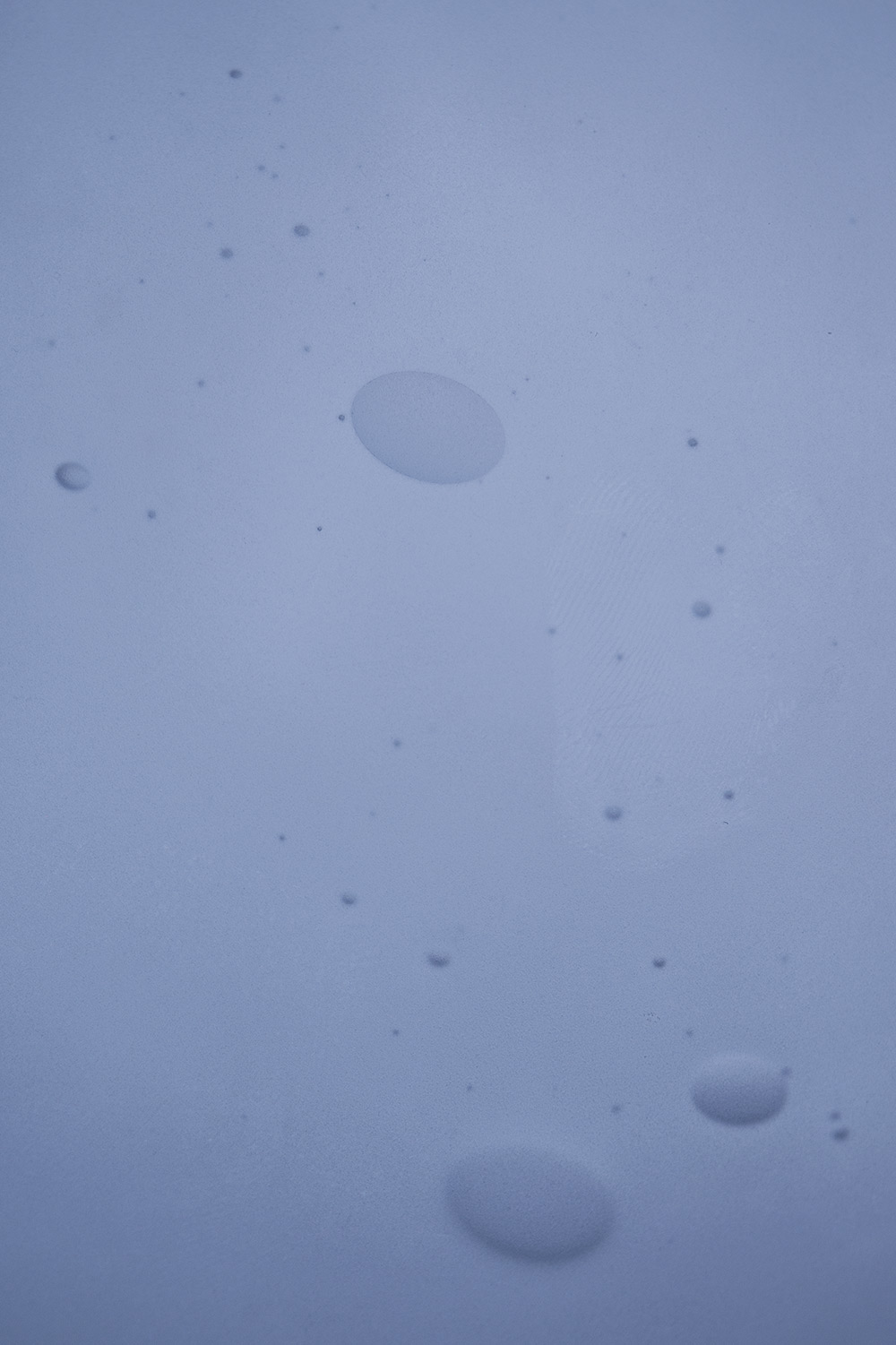
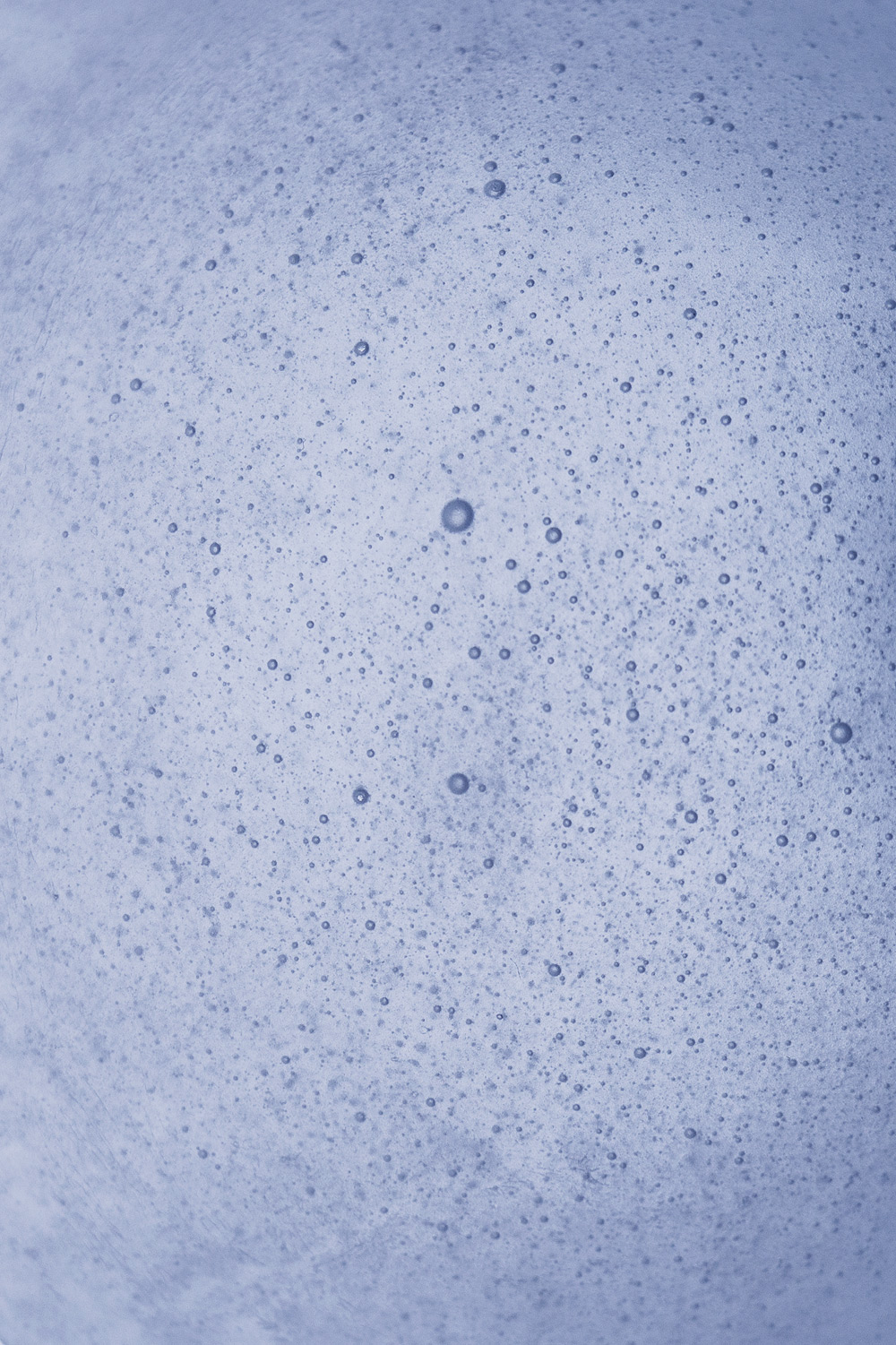
細かく入った気泡は雪片、硝子の流れは凍った水たまりの様にもみえる。水の景色をガラスにのせたいと言っていた。朝の光の中で眺めると森に滴る春の雪解け水にも見えて、そんな様々な景色が見えるというのはなんて素敵なんだろうかと思う。
紀元前一世紀頃に装飾品として日本に伝わったとされるガラスは、江戸時代に長崎や江戸で本格的な製造が始まる。織田信長に金平糖をガラスにいれて贈ったという話は有名だけれど、きっと昔の人達はこの美しい宝石のような塊に心奪われたのだと容易に想像できる。明治期には洋風文化への憧れから産業化が進み、昭和初期にはガラスは庶民の日用品として普及し、住宅建築では型に流し込んで模様をつける窓のプレスガラスが広まる。祖母が毎日立っていた家のキッチンにもたくさんの磨りガラスやプレスガラスがあった。暑い夏に透明のビニールクロスの上で食べたかき氷やスイカも大切な記憶だ。半透明で少しオーロラ色をした氷コップが大好きだった。
薄曇った水たまりは完全な透明ではなくて、少しブルーグレーの色をしていて、それを何度もジャンプして割った通学路の帰り道。軒先や木の枝から落ちるつららをばきっと折ってステッキのようにして遊んだ放課後。
朝日の中でガラスのコップに白湯を注ぎ、それを飲みほしながら氷柱越しの景色を窓から眺めていると、透明できらきらしたものたちばかりに囲まれる、透明な記憶がやってくる。
When the morning sun arrives beneath a gray sky, the icicles hanging from the eaves begin to catch and scatter the light. Formed in the quiet of night, they fall one after another with a brittle clatter as the sun rises and the air softens.
The glass vessels of Kentaro Senuma possess a texture as if water has risen up from the earth itself; when filled with water, they glow from within. Winters in Akita are long and severe, yet rich in texture—he blows the glass with a breath as soft as a sigh, sealing that texture into its surface. The tiny air bubbles resemble scattered snowflakes; the flow of the glass remained on its surface recalls frozen puddles. "I want to place the landscape of water into glass.” He said. In the morning light, they can appear like meltwater dripping through a forest at the edge of spring. How wonderful it is that a single object can hold so many shifting scenes.
Glass is said to have been introduced to Japan around the first century BCE as ornament. By 18th century Edo period, full-scale production had begun in Nagasaki and Edo (later renamed Tokyo). There is a well-known story of a 16th century's most powerful warlord Oda Nobunaga was gifted konpeitō sugar candy enclosed in a glass vessel; it’s not hard to imagine how people of the time were captivated by glasses—these jewel-like forms. In the 19th century Meiji era, admiration for Western culture propelled glass into industry, and by the early 20th century Shōwa period it had become a material of everyday life. Pressed glass windows—cast into molds to create patterns—spread through domestic architecture. In my grandmother’s kitchen, where she stood each day, there were many panes of frosted and pressed glass. I remember, too, summer afternoons—shaved ice and slices of watermelon eaten atop a clear vinyl cloth. I loved the slightly iridescent, translucent ice cups.
Puddles, faintly clouded, were never perfectly clear but tinged with a blue-gray hue. On the walk home from school, I would jump again and again to break their thin skins. After school, I snapped icicles from the eaves and branches, playing with them like makeshift staffs.
In the morning sun, as I pour hot water into a glass and drink it slowly, gazing through the icicles beyond the window, a memory returns—clear and shimmering—surrounded by nothing but transparent things.