: Could not find asset snippets/file_domain.liquid/assets/img/top/loading.png)
もう都会では汗ばむ季節だという頃、山にはようやく遅めの春が訪れる。ふかふかとした土の上に、鮮やかな黄緑色の草が少しずつ芽吹いてくる。風が吹くと、起毛されたようなその緑のふさふさたちが、ゆっくりとダンスする。
本格的な夏が来ると、緑はもっと深く、濃くなる。その頃になると霧深い日が多くなり、薄く透明なもや越しにその景色を見ることになる。細く華奢な草の先は露を背負い、静かに揺れている。お盆が過ぎると、短い山の夏が終わる。肌寒い日が続き、いつのまにか青々としていた草花は枯れ、今度は黄金色の草が現れる。寂しい景色の冬を迎えると、あたりには雪化粧がほどこされ、ふかふかとした雪の間から枯れ草がのぞき、風に揺れている。
輪郭を捉えることもできないほど細い、その草たちの様子を、車窓からぼうっと眺めながら目で撫でていた。
「つっきり」と呼ばれる技法がある。この仕事を始めてから一度も、その加工現場を見せてもらえたことがない。どうやったらあんな風にふさふさとなるのか不思議でならないが、どこでもそれは秘密の技法として認知されている。そして今回も、見ることはできなかった。綺麗に整列した経糸からランダムに糸を飛ばして織り、それらを特別な方法でカットする。そうすることで糸が立ち上がり、私が見ていた草たちのダンスのようになびく。細く、ほそく、糸でしか表現することのできない動きだ。
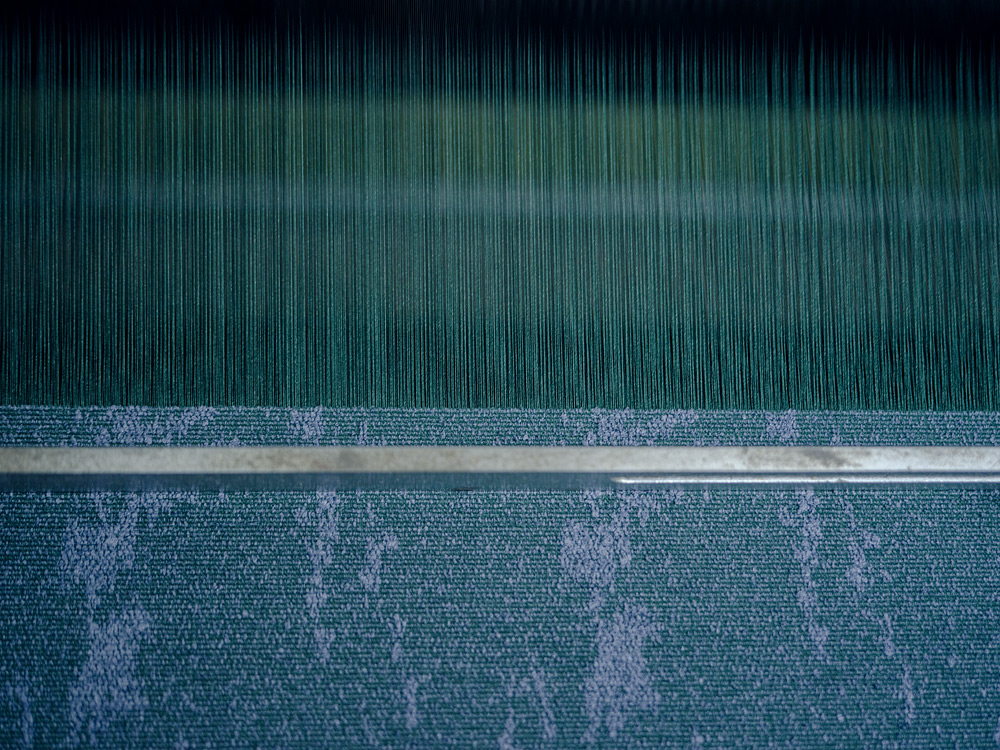
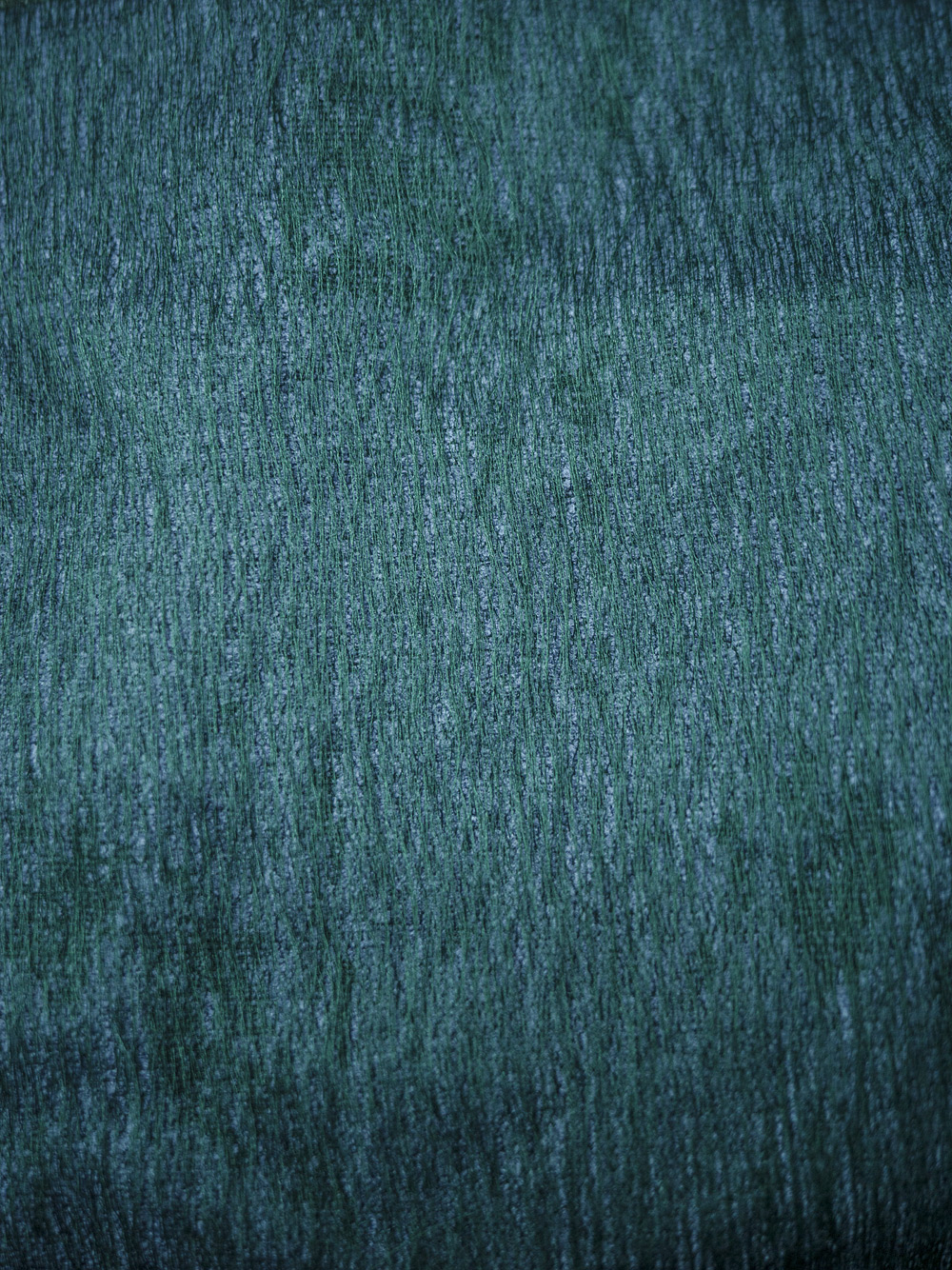
ベースには起毛糸を使い、苔のような地模様をジャカードで入れている。草たちの土台となる、ふかふかとした土のテクスチャーを表現するためだった。織り上がったばかりの生地では、経に飛ばした糸たちはまだ寝ていて、全体が少しふっくらとしていた。そこに秘密の技法で加工が施されると、眠っていた糸たちが立ち上がる。その瞬間を想うと、冬が終わり、春になって土の中から草が芽吹いてくる時のことを思い出す。
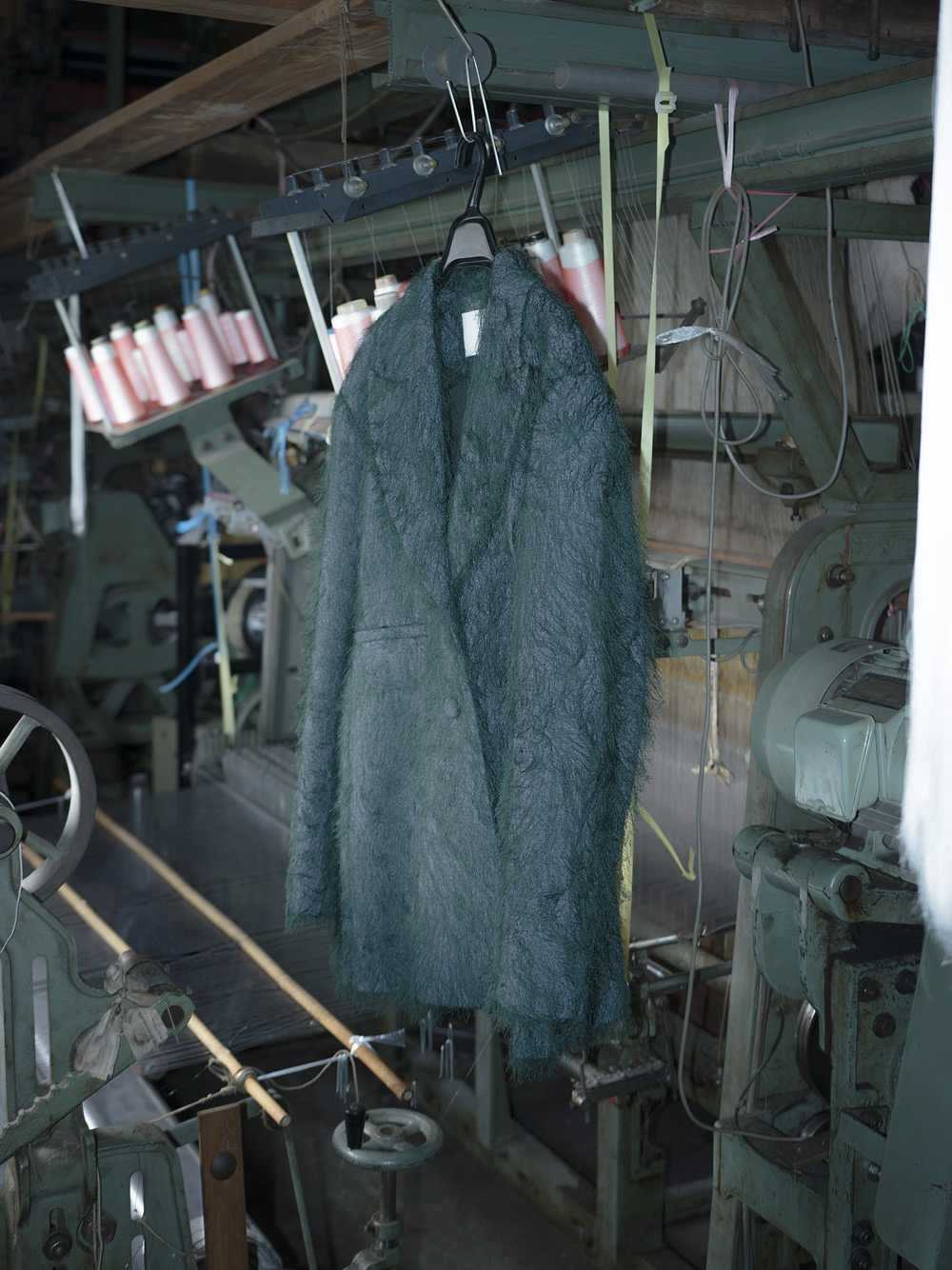
仕立てられた服に袖を通すと、身体のまわりに、湯気のような、霧のような、細いものを纏った気配が生まれる。輪郭をはっきりと捉えることのできないものが、身体の動きに合わせて、静かに揺れると、山の季節の移り変わりを纏っているような気持ちになるのだった。
By the time the city has grown warm enough to bring a sheen of perspiration to the skin, a belated spring is only just arriving in the mountains. From the soft, yielding earth, vivid yellow-green grasses begin to emerge, little by little. When the wind blows, these tufts of green, almost as though gently brushed, begin to dance.
With the arrival of summer in earnest, the green grows deeper and richer. By then, misty days become more frequent, and the landscape is seen through a thin, translucent veil of haze. Dew gathers on the tips of the slender, delicate grasses, which sway quietly beneath its weight. As mid-August passes, the mountain’s brief summer draws to a close. The days turn chilly, and before one quite realises it, the lush grasses and flowers have withered, giving way to fields of gold. Then winter arrives, bringing with it a landscape of solitude. Snow settles over everything, and here and there, withered grasses peer through the soft drifts, trembling in the wind.
From the window of the car, I would gaze absent-mindedly at those grasses, so fine that their outlines could scarcely be discerned, letting my eyes gently trace their forms.
There is a technique known as tsukkiri. In all the years since I began this work, I have never once been allowed to see the process being carried out. I have always wondered how it produces such a soft, feathery surface, but wherever it is practised, the technique is regarded as a closely guarded secret. This time, too, I was unable to see it.
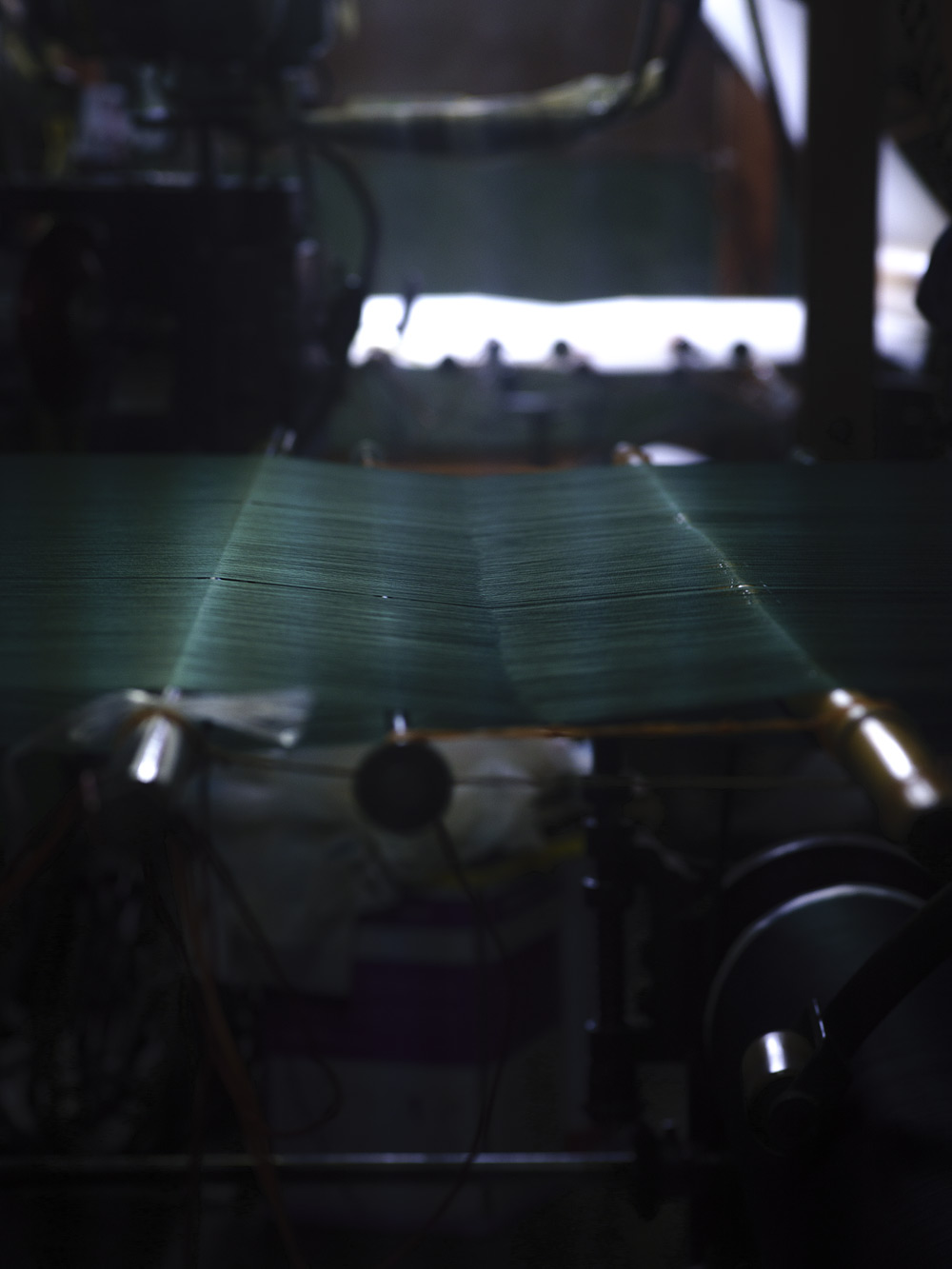
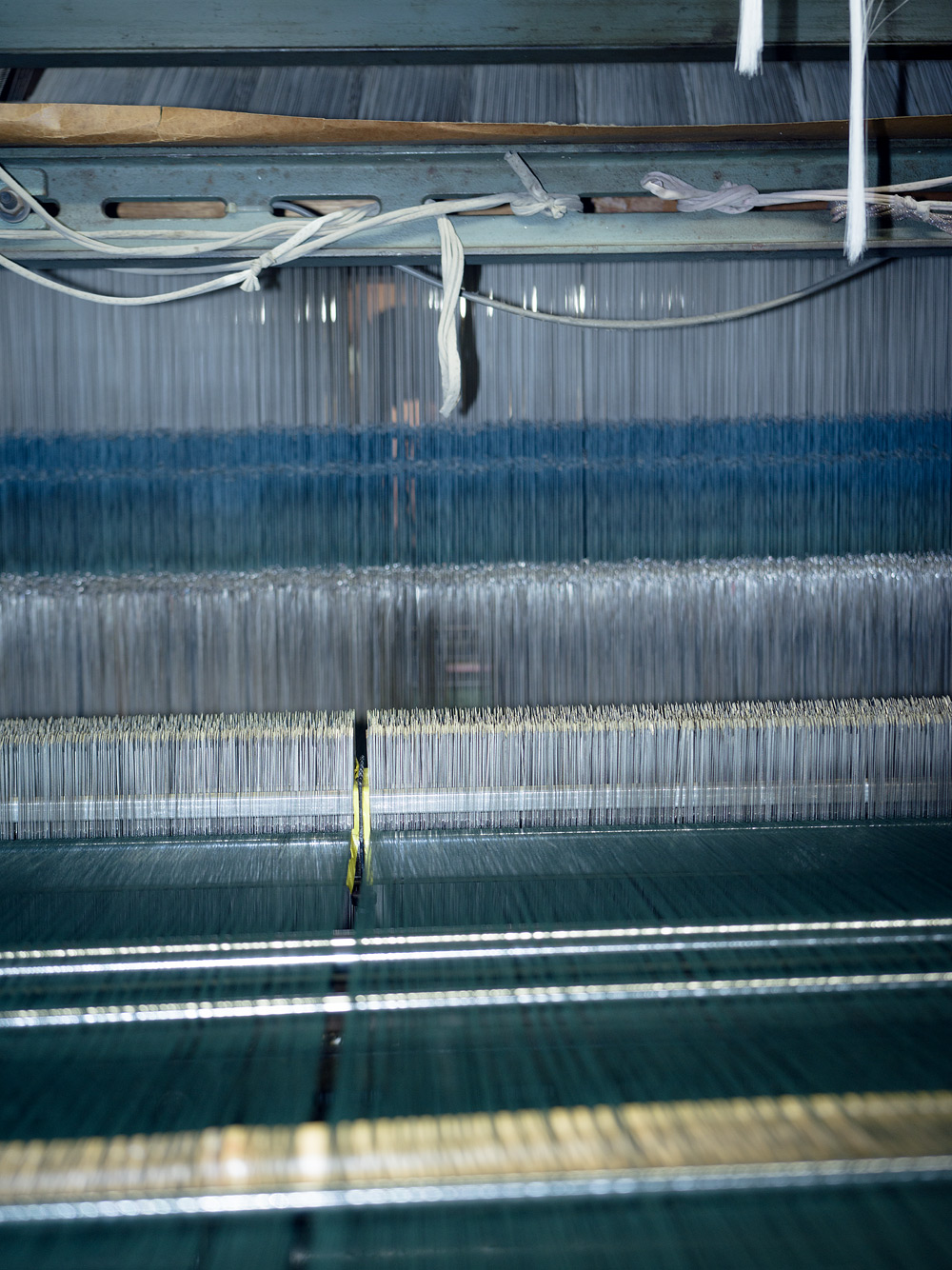
Threads are woven so that they float at random across the neatly aligned warp, before being cut using a special method. In doing so, the threads rise from the surface and begin to drift and sway, like the dancing grasses I had been watching. Fine, impossibly fine — a movement that could only ever be expressed through thread.
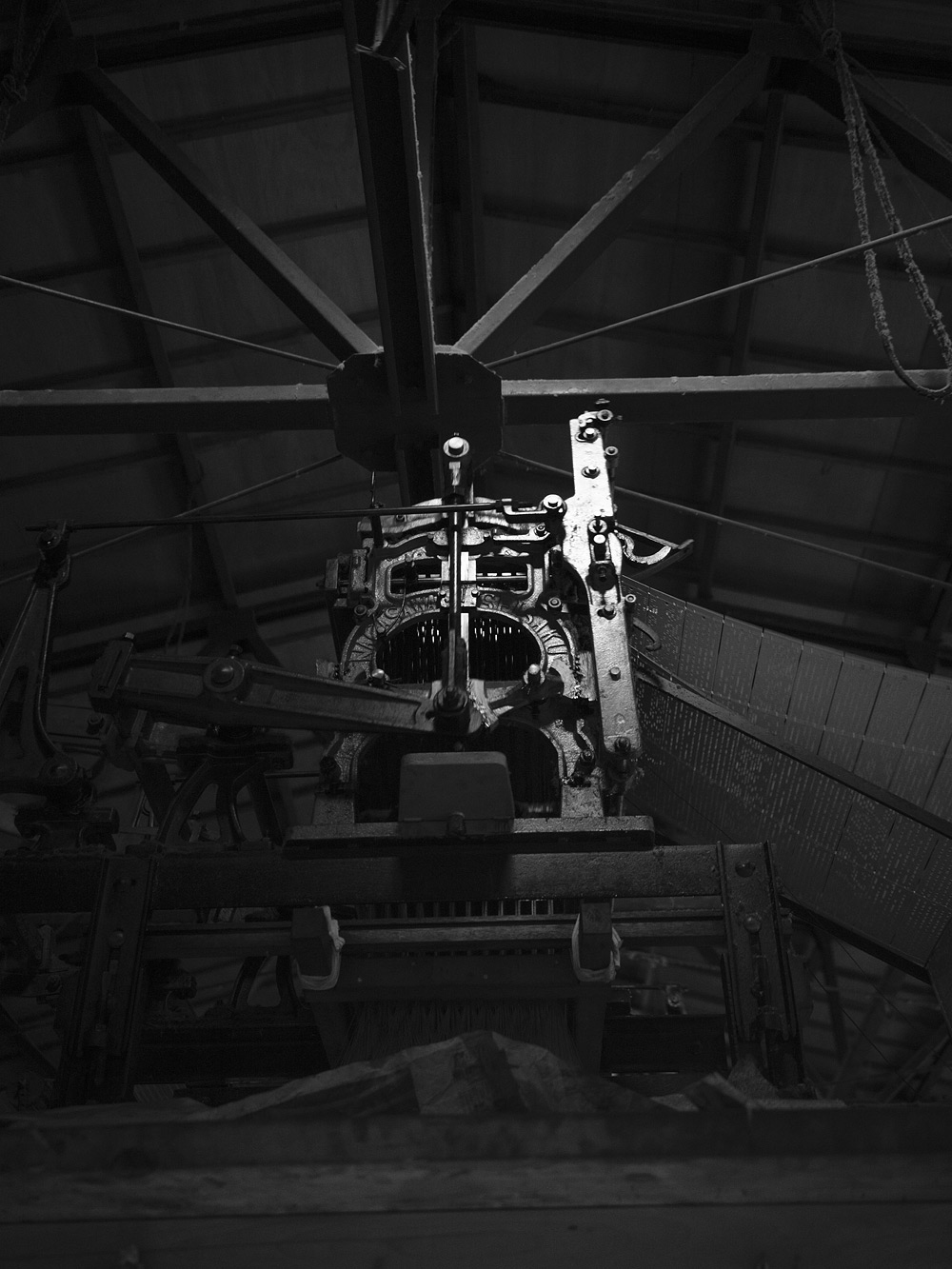
For the ground, I used brushed yarn, weaving a moss-like pattern into it in jacquard. I wanted to recreate the texture of the soft earth from which the grasses emerge. When the fabric first came off the loom, the floating warp threads were still lying flat, giving the whole surface a gentle fullness. Then, once the secret finishing technique had been applied, the sleeping threads began to rise.
Whenever I imagine that moment, I think of the end of winter, and of spring, when grasses begin to push their way out of the earth.
When I slip my arms into the finished garment, I sense something fine gathering around the body — like steam, or mist. Something whose outline can never quite be grasped begins to sway quietly with every movement of the body. And in those moments, I feel as though I am wearing the changing seasons of the mountains themselves.