: Could not find asset snippets/file_domain.liquid/assets/img/top/loading.png)

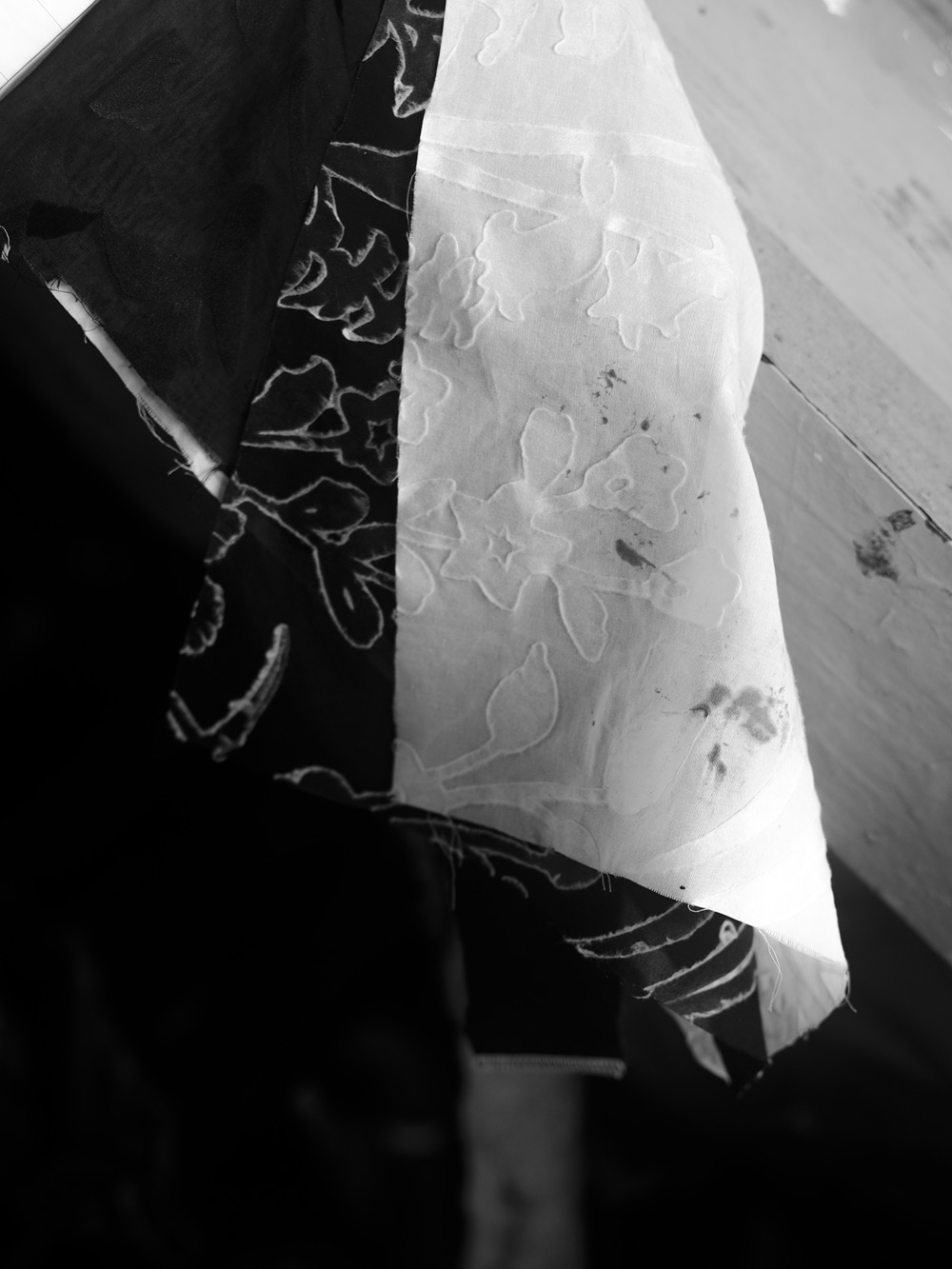
障子の向こうに、風に揺れる植物の影を見るのが好きだった。薄暗い光の中で、輪郭だけが静かに揺れる景色を、そのまま布に閉じ込めることはできないだろうか。そんなことを考えながら山野草の図案を描いていた時、かつて京都の工場で試作室に並んでいた一枚の生地を思い出した。薄い布に和紙を重ねた、光を透かすほど儚い生地だった。
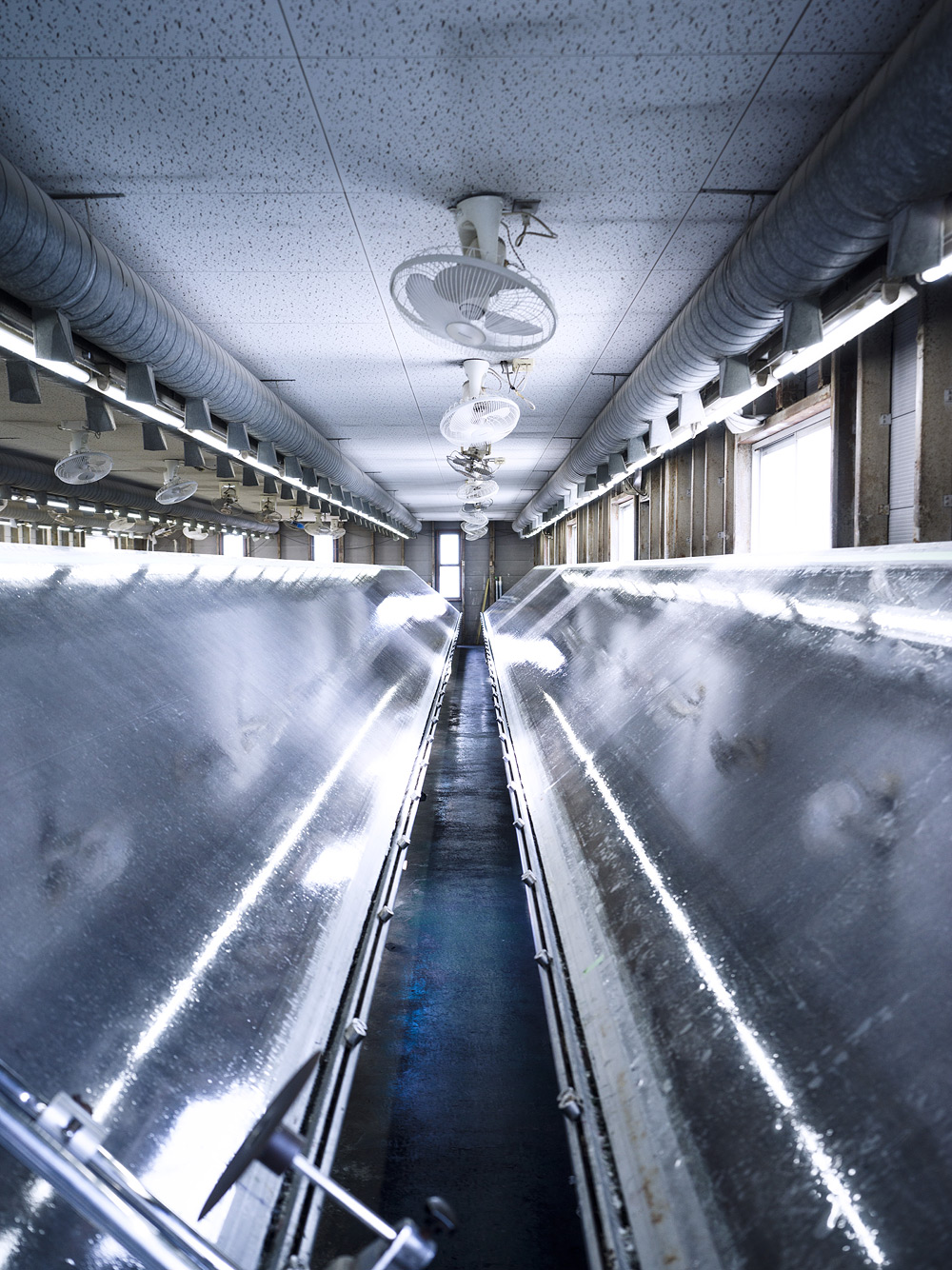
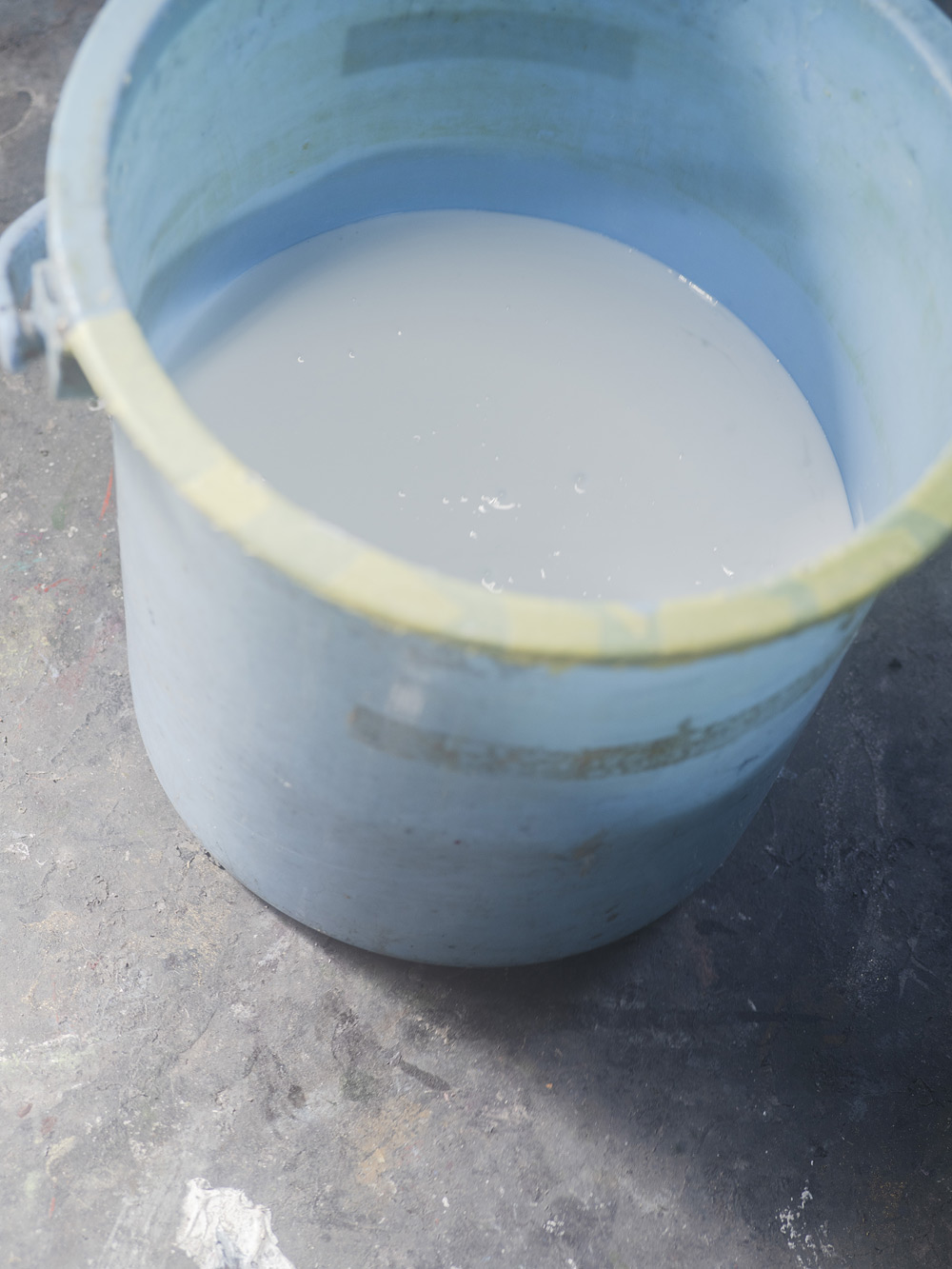
和紙を生地にプリントする技術は、友禅文化を背景に持つ手捺染が可能にするものである。そしてそれは一つの加工技術ではなく、長年に渡り京都に積み重ねられてきた手仕事の連なりによって生まれる。現場では、透明なフィルムを張った長い加工台の上に、生地を歪みなく貼ることから始まり、一枚ずつ丁寧に工程が重ねられていく。台下からは熱が送られ続け、樹脂が裏へ染み込まず、尚且つ糊が余計な場所へ広がらないように工夫が施されている。真夏でも扇風機は使わない。空気中の目に見えない埃さえ品質に影響するため、静かな緊張感の中で作業は続く。
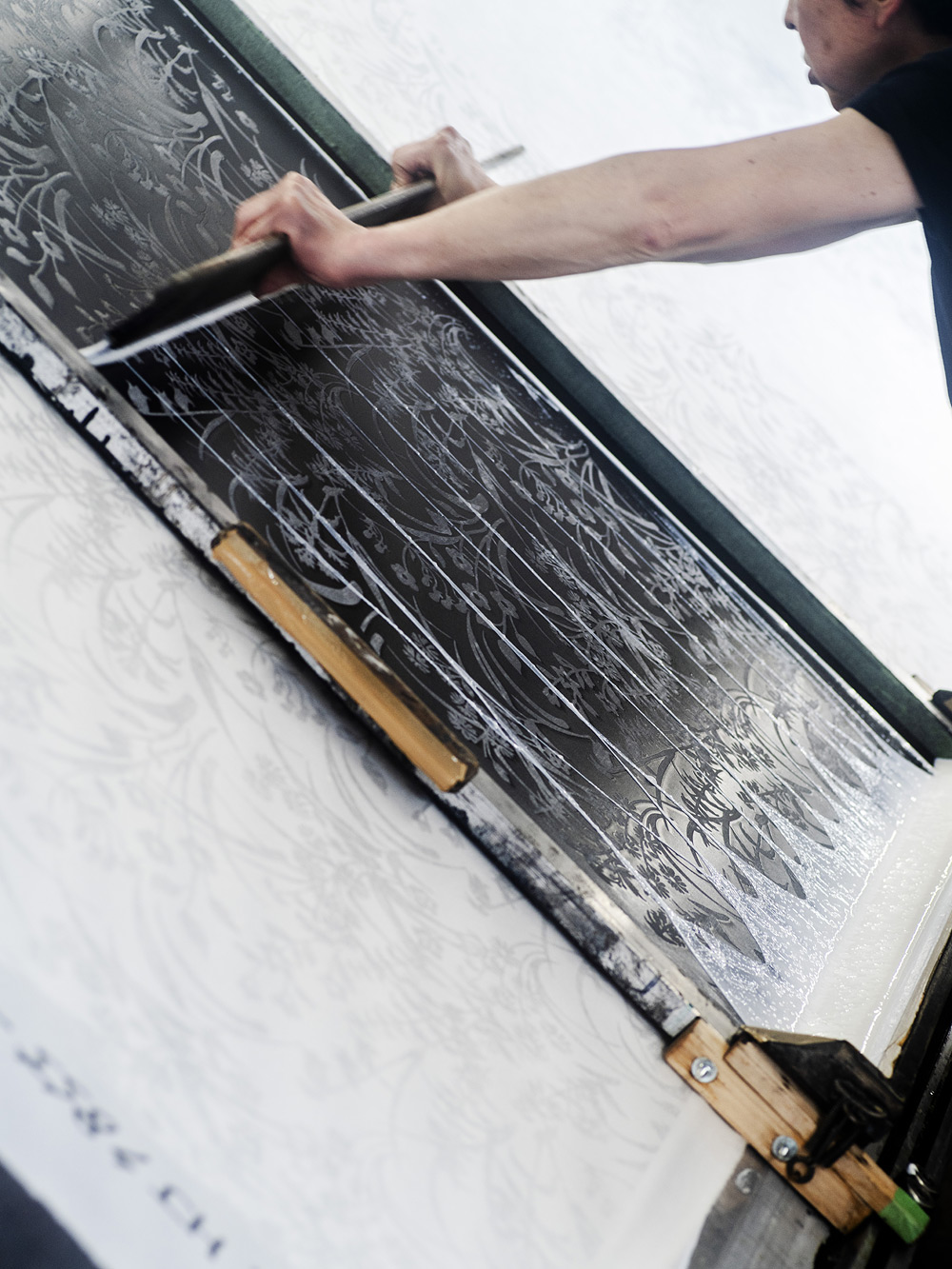
和紙を貼る工程では、三人の職人が息を合わせながら、一枚の生地へ和紙を重ねていく。生地、樹脂、和紙、そして再び樹脂。何層もの工程を経て、植物の柄だけが布の上へ残される。版の型や作業の順番にもすべて理由があり、長年受け継がれてきた知恵が、当たり前のように手の動きへと染み込んでいた。
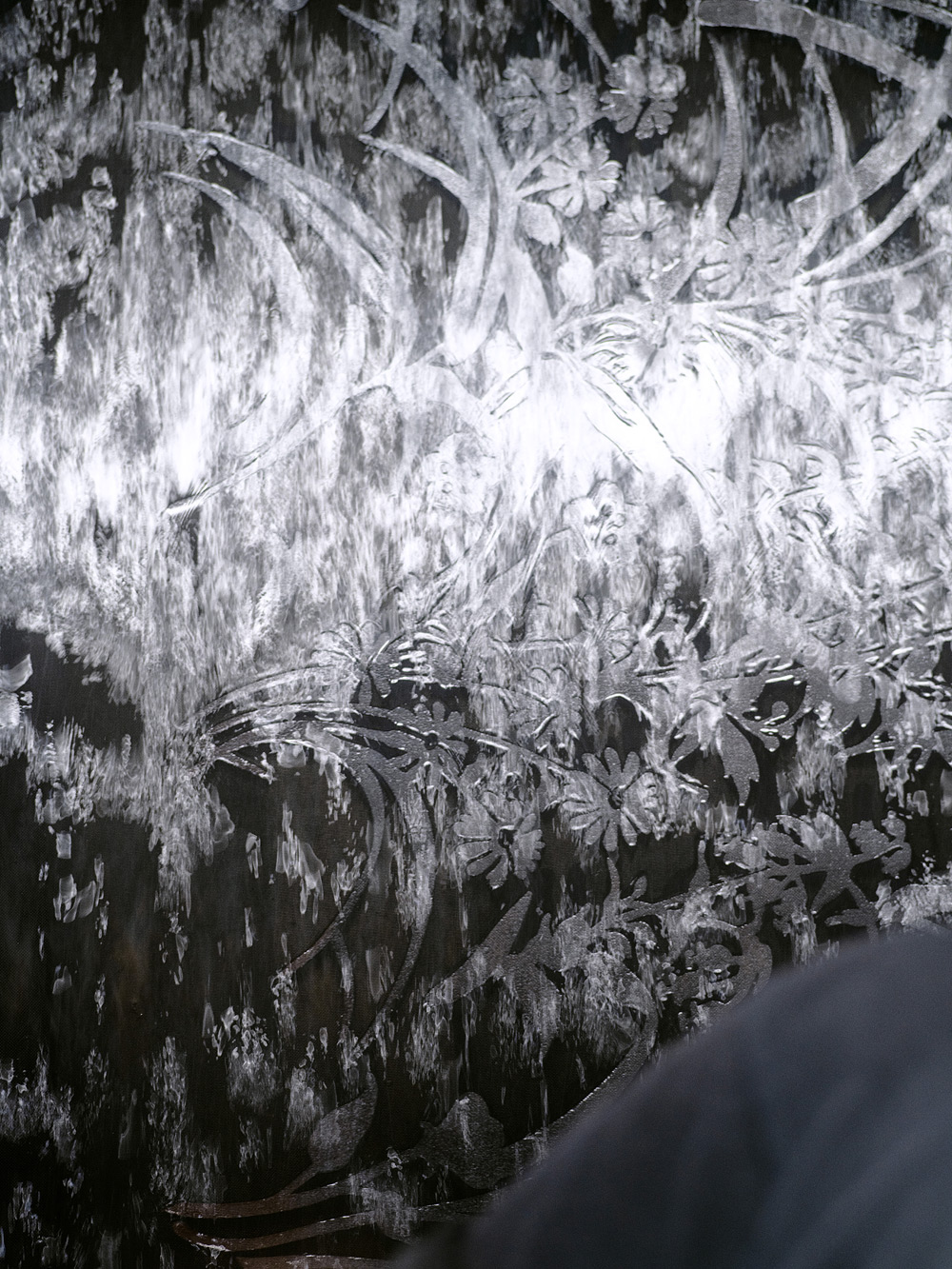
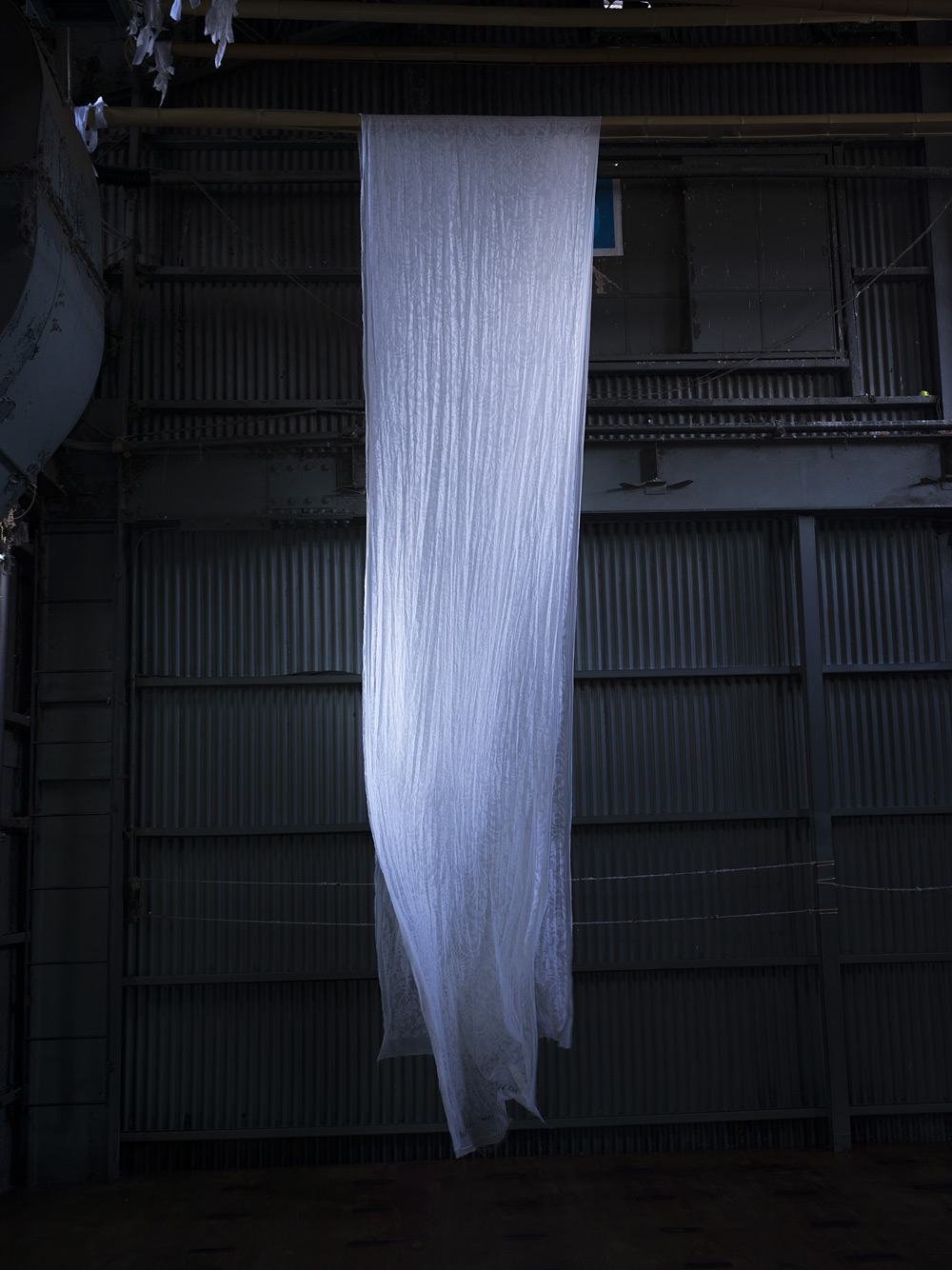
翌朝六時半、生地はすでに蒸工場へ運ばれていた。150度の熱によって樹脂を生地に定着させ、その後、井戸水でゆっくりと洗われる。不要な和紙だけが流れ落ち、描いた植物だけが静かに布に残っていく。水面に揺れる生地を眺めていると、まるであの時、障子の向こうで揺れていた草花が、そのまま水の中で踊っているように見えた。
一枚の生地が完成するまでには、複数の工場と多くの職人が関わり、それぞれが次の工程を信頼して仕事を受け渡していく。その見えないリレーが、この布を支えている。
洗いを終えた生地が次の工場へと送られるのを見届けた後、近所の純喫茶で染工場の会長とモーニングをした。昔は朝一で生地を持ち込んでここで朝ごはんを食べながら蒸上がりを待っていたんだよと教えてくれた。こうやって皆が重ねてきた時間の堆積の中に、ほんの少しだけ自分もご一緒できることが嬉しくて、やっぱりものづくりはやめられないなぁと手を振って別れたタクシーの中で幸せな気持ちでいっぱいになっていた。
I used to love watching the shadows of plants swaying in the wind beyond the shoji screens. I often wondered if it might be possible to capture that scene just as it was—the faintly lit landscape, with only the silhouettes moving quietly—and somehow enclose it within a piece of cloth. One day, while I was drawing patterns of wild mountain plants with this thought in mind, I remembered a piece of fabric I had once seen laid out in a sampling room at a factory in Kyoto. It was an incredibly delicate fabric, made by layering washi paper over a thin cloth, so fragile that light could pass straight through it.
The technique of printing washi onto fabric is made possible through hand-block printing, a craft rooted in the culture of yuzen dyeing. It is not a single process or technique, but the result of a succession of handcrafts that have been cultivated and passed down for generations in Kyoto. The process begins by carefully securing the fabric without the slightest distortion onto a long worktable covered with a transparent film. From there, each stage is meticulously carried out, one piece at a time. Heat is continuously sent up from beneath the table, with careful measures taken to prevent the resin from seeping through to the reverse side of the fabric, while also keeping the paste from spreading beyond where it is meant to go. Even in the height of summer, no fans are used. Even the tiniest invisible particles of dust in the air can affect the quality, so the work continues in a quiet atmosphere of concentration and tension.
When it comes time to apply the washi, three artisans work in perfect rhythm, layering the paper onto a single piece of fabric. Fabric, resin, washi, and then resin again. After passing through layer upon layer of processes, only the botanical patterns remain on the cloth. There is a reason behind everything—the shape of the screens, the order of each step—and the wisdom accumulated over many years has become so deeply embedded in the artisans’ hands that it appears almost instinctive.
By six-thirty the following morning, the fabric had already been taken to the steaming factory. The resin is fixed onto the cloth with heat at 150 degrees Celsius, after which the fabric is slowly washed in well water. Only the unnecessary washi is washed away, leaving behind the plants I had drawn, quietly held within the cloth. As I watched the fabric ripple gently across the surface of the water, it seemed as though the grasses and flowers I had once seen swaying beyond the shoji were now dancing there, in the water, exactly as they had been.
It takes several factories and the hands of many artisans to complete a single piece of fabric. Each person carries out their part of the work with trust in the next, passing it carefully from one process to another. It is this invisible relay that holds the fabric together.
After seeing the washed fabric off on its way to the next factory, I had breakfast at a traditional kissaten nearby with the chairman of the dyeing factory. He told me that, in the old days, they would bring the fabric in first thing in the morning, then come here for breakfast while waiting for it to finish steaming.
I felt so happy to be part, even just for a little while, of the legacy built up through all the layers of time that everyone has shared over the years. As I waved goodbye from the taxi, I found myself filled with a quiet sense of happiness, thinking once again: this is why I could never stop making things.